
Why Metal-Detectable Bandages Matter in Food Processing and Food Service Environments
Published by UnityMedicalSupplies on Apr 23rd 2026
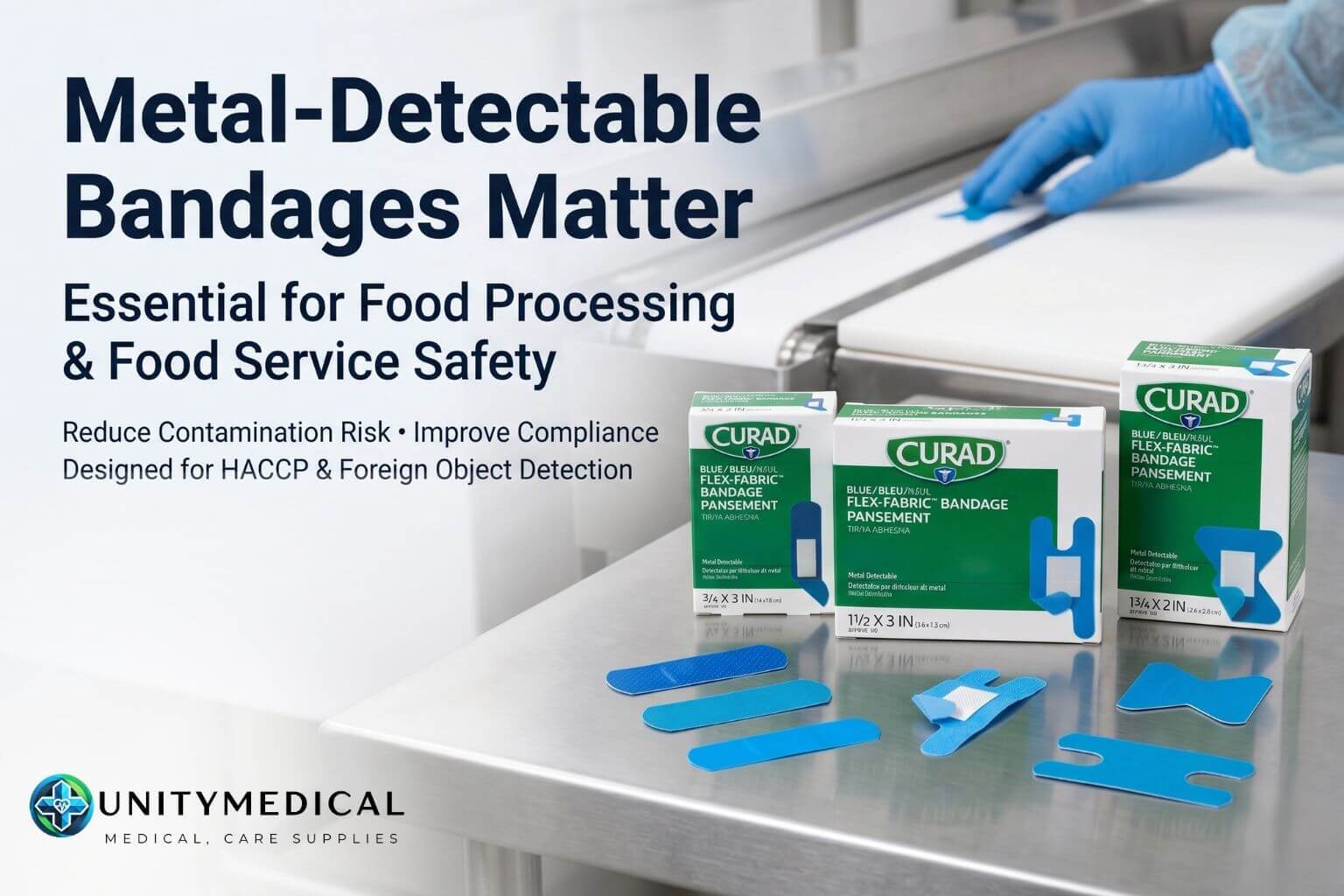
In food processing and food service environments, even small first aid items can play an important role in contamination control. A bandage is not just there to cover a minor cut or scrape. In the right setting, it also supports workplace safety, visual accountability, and broader food handling protocols.
That is why many food facilities choose bandages designed specifically for these environments. Features like bright blue color, metal detectability, durable adhesion, and specialized shapes can help teams better align first aid supplies with operational needs.
In this guide, we will look at why metal-detectable bandages matter, what features buyers should compare, and how food service and food processing teams can choose options that support both worker protection and food safety efforts.
Why Standard Bandages Can Be a Problem in Food Handling Environments
Standard adhesive bandages are often made for everyday consumer use, not for food handling operations. In a restaurant, cafeteria, food packaging facility, or processing plant, that can create a problem. A traditional skin-tone bandage may be harder to spot quickly if it becomes misplaced, especially in a fast-moving environment.
For teams focused on reducing foreign material risk, visibility matters. A bandage that blends in too easily may not support the same level of visual control as one intentionally designed for food-related settings.
That is why many buyers look for first aid products built with contamination awareness in mind. In these environments, a better bandage may do more than protect the wound. It may also support a cleaner, more controlled response if something goes wrong.
What Makes a Bandage “Metal Detectable”?
A metal-detectable bandage contains an embedded metal element designed to be identified by metal detector systems if the bandage enters the production stream. In food processing and packaging settings, that added detectability can support broader contamination control procedures.
Metal-detectable bandages are commonly used in operations where product safety, line monitoring, and foreign material prevention are taken seriously. They are not a replacement for strong safety practices, but they can be a useful part of a more complete food safety program.
For procurement teams and facility managers, that makes metal-detectable bandages a practical upgrade from standard options when the environment calls for additional safeguards.
Why Blue Bandages Are Common in Food Service and Food Processing
Blue bandages are widely used in food environments because the color stands out more clearly than traditional beige or skin-tone options. Since blue is less commonly found in food products, it is often easier to identify visually if a bandage becomes misplaced.
Easier Visual Identification
The bright blue color helps supervisors and employees spot the bandage quickly during prep, packaging, or cleanup tasks. This visual contrast is one of the main reasons blue bandages are often preferred in food-related settings.
Faster Response if a Bandage Is Misplaced
When a bandage is easier to see, teams may be able to respond faster. That can support internal safety procedures and help reduce delays in identifying a problem.
Better Fit for Food Safety Practices
Because food handling environments often emphasize contamination prevention, products that are easier to detect visually can make more sense than standard consumer-grade alternatives.
Key Features to Look for in Food Service Adhesive Bandages
When choosing adhesive bandages for food processing or food service staff, it helps to compare more than just size and price. The right product should support visibility, secure wear, comfort, and practical performance during active work.
Metal Detectability
This is one of the most important features for food manufacturing and packaging operations. A metal-detectable component can help support line safety procedures where detection systems are in place.
Bright Blue Color
Blue bandages are easier to distinguish in most food environments. That makes them a better fit for facilities that want stronger visual identification than standard flesh-colored options provide.
Secure Adhesive Performance
Food service employees and processing staff often work in fast-paced conditions with constant hand movement. Adhesive performance matters, especially in environments where workers are bending fingers, wearing gloves, or handling tasks that create friction.
Skin-Friendly Wear
Strong adhesion is important, but so is comfort. Bandages that are designed to stay in place without being unnecessarily harsh on the skin can be a better choice for all-day wear.
Protected Wound Coverage
A sealed wound pad can help keep out dirt and germs while covering minor wounds more effectively. For workplace first aid supplies, this extra layer of protection can be an important consideration.
Backing Material Options
Different backing materials may make more sense for different work environments. Some buyers prefer more economical plastic options, while others want a flex-fabric material that moves more naturally with the hand.
Flex-Fabric vs. Plastic Bandages for Food Service Staff
One of the most practical comparisons buyers make is between flex-fabric and standard plastic bandages. Both can serve a role, but they are not always ideal for the same work conditions.
| Feature | Flex-Fabric Bandages | Standard Plastic Bandages |
|---|---|---|
| Best For | Active workers who need more flexibility and conformability | General use where budget and basic coverage are the main priorities |
| Flexibility | Typically better for movement around fingers and joints | Usually less conforming than fabric styles |
| Durability | Often a stronger choice for fast-paced work environments | Practical for standard first aid use |
| Cost Positioning | Typically positioned as a higher-performance option | Often the more economical option |
For food handling teams that move constantly, flex-fabric may be the better fit because it can offer better conformability and durability. Standard plastic bandages can still be useful when the application is more straightforward and cost is a major factor.
Choosing the Right Bandage Shape for Busy Hands
Food service and processing workers often use their hands continuously, which means bandage shape can make a real difference. A standard strip may work well for some minor cuts, but other areas of the hand may need a more specialized shape for better coverage and wear.
Standard Strip Bandages
These are a common choice for general-purpose minor cuts and abrasions. They work well when the injury is on a flatter part of the hand or finger.
Fingertip Bandages
Fingertips bend, grip, and come into contact with surfaces constantly. A fingertip-shaped bandage can offer a more secure fit in that high-movement area.
Knuckle Bandages
Knuckles are another high-flex zone where a standard strip may not always stay in place as well. A knuckle-shaped bandage is designed to wrap more effectively around joints.
Choosing the right shape can improve comfort, support wear time, and help the bandage perform better during active work.
Who Should Consider Metal-Detectable Bandages?
Metal-detectable bandages are especially relevant for teams working in environments where contamination prevention matters as much as routine first aid coverage.
These products may be a strong fit for:
- food processing plants
- food packaging operations
- commercial kitchens
- restaurants
- cafeterias
- school food service programs
- bakery operations
- hospitality and institutional food preparation teams
In these settings, first aid supplies are often selected not just for employee care, but also for their role in supporting operational safety and workplace readiness.
A Practical Bulk Option for Food Safety-Conscious Teams
For teams looking for a bandage designed specifically for food handling environments, CURAD Food Service Metal-Detectable Adhesive Bandages offer a practical solution. These blue bandages are made to support both worker protection and contamination awareness in food service and food processing settings.
Key product advantages include:
- bright blue color for easier visual identification
- embedded metal beneath the nonadherent wound pad for detectability
- secure four-sided seal to help keep out germs and dirt
- skin-friendly adhesive for longer wear without unnecessary irritation
- multiple size and shape options, including fingertip and knuckle styles
- bulk case packaging suited for larger teams and routine restocking
The product is available in both flex-fabric and standard plastic backing options, giving buyers more flexibility based on wear needs and budget considerations. The bulk case includes 1,200 bandages total, making it a practical fit for facilities that need dependable first aid inventory on hand.
Final Thoughts
In food processing and food service environments, the right adhesive bandage does more than cover a wound. It can also support contamination control, visual accountability, and day-to-day operational readiness.
When comparing options, buyers should look beyond basic first aid function and consider features such as metal detectability, bright blue color, secure adhesion, backing material, and shape selection. These details can make a meaningful difference in busy environments where safety and consistency matter.
For facilities that want bandages better suited to food handling operations, metal-detectable options are often a smarter choice than standard consumer bandages. They help align routine first aid supplies with the realities of food safety-conscious workplaces.
Frequently Asked Questions
Why are bandages in food service usually blue?
Blue bandages are easier to see against most foods and food prep surfaces than beige or skin-tone bandages. That stronger visual contrast helps support faster identification if a bandage is misplaced.
What is a metal-detectable bandage?
A metal-detectable bandage contains an embedded metal element that can be identified by metal detector systems if it enters the production line. This feature helps support contamination control efforts in food-related environments.
Are metal-detectable bandages required in food processing?
Requirements can vary by facility policy, internal safety procedures, customer expectations, and food safety programs. Many operations choose them because they are a practical fit for contamination prevention efforts.
What is the difference between flex-fabric and plastic bandages?
Flex-fabric bandages are generally better for flexibility, movement, and conformability, while plastic bandages are often a more economical standard option. The right choice depends on the work environment and employee needs.
Which bandage shape is best for fingertips or knuckles?
Fingertip and knuckle bandages are typically better suited for those high-movement areas than standard strip styles. They are shaped to improve fit and coverage where the hand bends the most.
Explore related supplies: Shop food service first aid supplies, adhesive bandages, and workplace safety essentials designed for active, safety-conscious environments.