
First Aid Kit Essentials for Home, Work, and On-the-Go Use
Published by UnityMedicalSupplies on Apr 23rd 2026
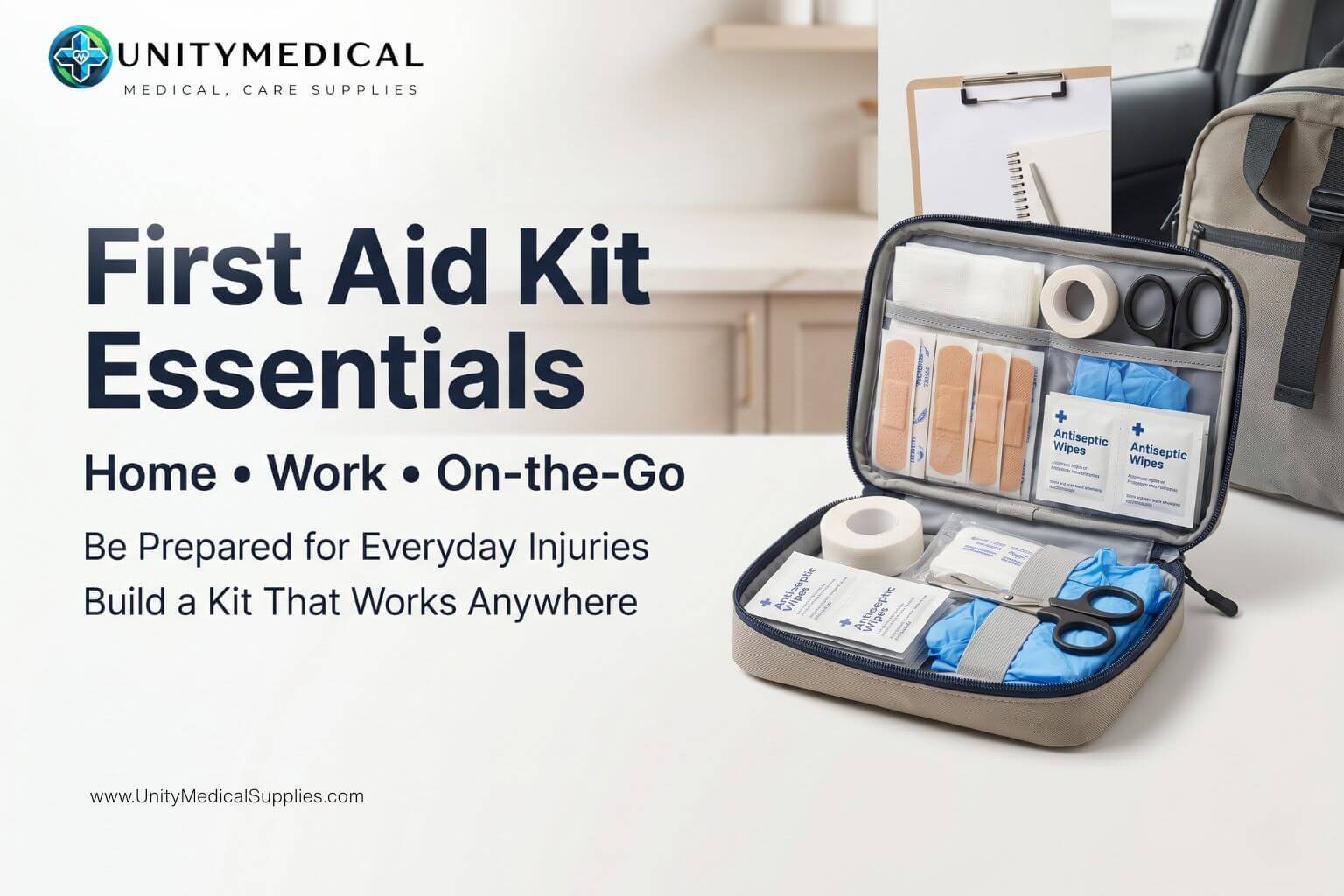
How to Build a Better First Aid Kit for Home, Work, and Everyday Preparedness
A first aid kit is only as useful as the supplies inside it. Many kits start out well stocked, but over time they can end up missing basics, holding expired items, or no longer matching the environment where they are used. That becomes clear at the worst possible moment, when someone actually needs them.
A better first aid kit is not necessarily the biggest one. It is the one that is complete, easy to access, and built around the kinds of minor injuries and everyday situations most likely to happen at home, at work, or on the go.
In this guide, we will walk through the core first aid kit essentials worth keeping on hand, how kits should differ by setting, and how to make sure your supplies stay ready over time.
Why a Well-Stocked First Aid Kit Matters
Minor injuries can happen almost anywhere, whether it is a kitchen cut at home, a scrape on the playground, a blister during travel, or a small workplace mishap. Having the right supplies nearby can help you respond more quickly and with less stress.
A well-stocked first aid kit helps support cleaner wound care, better organization, and everyday preparedness. It also reduces the chance that you will need to improvise with supplies that are missing, expired, or not suited to the situation.
Homes, workplaces, vehicles, travel bags, and shared spaces can all benefit from a kit that has been reviewed and built with real-world use in mind.
The Core First Aid Kit Essentials Every Kit Should Include
Most first aid kits should begin with a solid foundation of wound care basics. These are the items that cover a wide range of common needs and help create a more reliable response when cuts, scrapes, burns, or other minor injuries happen.
Adhesive Bandages
A variety of adhesive bandages is one of the most important parts of any basic kit. Different sizes and shapes help cover everyday cuts, scrapes, and small abrasions more effectively than relying on a single standard strip.
Gauze Pads and Non-Stick Dressings
For larger wounds or areas where an adhesive strip is not enough, gauze pads and non-stick dressings provide more coverage. These are useful additions for both home and workplace kits.
Medical Tape
Medical tape helps secure gauze and dressings in place. It is one of the most commonly overlooked first aid items, yet it becomes essential as soon as a wound needs more than a simple bandage.
Antiseptic Wipes, Prep Pads, or Wound Cleansers
Cleaning a wound before covering it is a basic part of first aid. Antiseptic wipes and wound cleansers are practical staples that help prepare the area before dressing.
Antibiotic Ointment or Wound Care Ointment
Many first aid kits also include ointment for basic wound care support where appropriate. This can be a useful addition in home and general-use kits.
Elastic Bandage or Wrap
An elastic wrap is useful for light support, compression, or securing certain dressings. It adds versatility to a kit and can be especially helpful in active households or workplaces.
Disposable Gloves
Gloves help create a cleaner first aid response and are a smart inclusion in any home, workplace, or travel kit.
Scissors and Tweezers
Scissors can help cut tape, gauze, or wrap materials, while tweezers are useful for carefully handling splinters or debris. These small tools add practical value to any first aid kit.
Burn Care Basics
Depending on the environment, burn dressings or burn gel may also be worth including. Kitchens, workshops, and workplaces often benefit from having at least a few burn care supplies on hand.
Cold Packs
Instant cold packs can be useful for bumps, swelling, and other minor impact-related injuries. They are particularly helpful in family, school, workplace, and sports-related settings.
What to Keep in a Home First Aid Kit
A home first aid kit usually needs to be the most versatile. It may be used for children’s scrapes, cooking-related cuts, blisters, minor burns, or general everyday wound care. Because of that, home kits often benefit from a broader assortment of supplies rather than just a small handful of basics.
Useful supplies for a home first aid kit often include:
- assorted adhesive bandages
- gauze pads and non-stick dressings
- medical tape
- antiseptic wipes or wound cleansers
- gloves
- burn care items
- tweezers and scissors
- cold packs
Households with children, older adults, or ongoing caregiving needs may benefit from a larger kit and more frequent restocking. The goal is not just to have something on hand, but to have enough of the right supplies for the people most likely to use it.
What to Keep in a Workplace First Aid Kit
Workplace first aid kits often need higher quantities, clearer organization, and a more deliberate restocking process. Offices, schools, shared facilities, and light industrial settings may all have different needs, but most benefit from a kit designed for multiple people rather than individual use.
A workplace first aid kit often includes:
- a wider variety of adhesive bandages
- gauze and dressings for larger coverage needs
- gloves for cleaner response
- antiseptic supplies
- elastic wraps
- cold packs
- burn care items where relevant
- tools and refill-friendly organization
In many workplaces, the biggest issue is not whether a kit exists. It is whether anyone is checking it. A designated review and restocking routine can help keep supplies complete and ready when needed.
What to Keep in a Car, Travel, or Everyday Carry First Aid Kit
Portable first aid kits need to be compact, practical, and focused on high-utility items. Space is limited, so each item should earn its place. Travel, car, and everyday carry kits often work best when they prioritize wound care basics and a small number of versatile tools.
Good choices for a portable first aid kit may include:
- adhesive bandages
- antiseptic wipes
- gauze pads
- medical tape
- gloves
- small scissors
- tweezers
- blister care items
- a compact burn or sting care option if relevant
Travel and vehicle kits should also be checked more often. Items may get used, lost, exposed to heat, or forgotten after a trip, which makes replenishment especially important.
How to Choose the Right Wound Care Supplies for Your Kit
The best first aid kit is built around dependable wound care basics. Understanding the role of each supply type can make it easier to create a kit that is both practical and easier to maintain.
Bandages for Minor Cuts and Scrapes
Adhesive bandages are ideal for many common everyday injuries. Keeping multiple sizes and shapes on hand makes your kit more useful than relying on one standard option.
Gauze and Dressings for Larger Coverage Needs
Some wounds need more coverage than a simple adhesive strip can provide. Gauze pads and dressings help expand the usefulness of a first aid kit for more varied minor injury situations.
Antiseptics and Cleansers for Wound Prep
Cleaning before covering is one of the most basic steps in first aid. That makes wipes and cleansers some of the most consistently useful items in a kit.
Tape and Wraps for Securing and Support
Medical tape and elastic wraps are often overlooked until they are needed. They add flexibility to a kit and help bridge the gap between basic bandage use and more secure wound care setup.
Skin-Sensitive or Latex-Free Options
If the kit may be used by multiple people, it may be helpful to consider skin-sensitive or latex-free supplies. This can be especially useful in homes, schools, offices, and shared settings.
Common First Aid Kit Mistakes to Avoid
Even people who keep a first aid kit nearby often make the same avoidable mistakes. Fixing these gaps can make the kit more reliable without requiring a major overhaul.
Only Keeping a Few Adhesive Bandages
A handful of standard strips is rarely enough. Different cuts and scrapes call for different sizes, shapes, and coverage options.
Forgetting Gauze, Tape, or Gloves
These are some of the most commonly missing essentials. Without them, even a small first aid kit can feel incomplete very quickly.
Ignoring Expiration Dates
Antiseptic wipes, ointments, and some sterile items may expire. A kit that looks full may still be less useful than expected if supplies are outdated.
Not Tailoring the Kit to the Environment
A home kitchen, office break room, vehicle, and travel bag do not all need exactly the same supplies. Better kits reflect the setting where they are most likely to be used.
Waiting Until Something Runs Out
Many people do not notice how incomplete a kit has become until they need it. Restocking should happen before the next injury, not after.
When to Restock Your First Aid Kit
A first aid kit should be reviewed regularly, not just after something has been used. Restocking is one of the simplest ways to keep your supplies useful and avoid last-minute surprises.
Good times to check and restock a first aid kit include:
- on a regular monthly or quarterly schedule
- after any item has been used
- when expiration dates are approaching
- after travel or seasonal outings
- after workplace incidents or busy usage periods
Some people find it helpful to keep a simple checklist inside the kit so they can quickly see what needs to be replaced. A small habit like that can make a big difference over time.
A Practical First Aid Kit Checklist
Use this simple checklist as a starting point when reviewing or building a first aid kit for home, work, or travel.
| Supply Type | Why It Matters | Best For |
|---|---|---|
| Adhesive bandages | Covers minor cuts and scrapes | Home, work, travel |
| Gauze pads | Provides larger wound coverage | Home, work, travel |
| Medical tape | Secures gauze and dressings | Home, work, travel |
| Antiseptic wipes | Helps clean wounds before dressing | Home, work, travel |
| Disposable gloves | Supports a cleaner response | Home, work, travel |
| Tweezers | Useful for splinters or debris | Home, travel |
| Scissors | Cuts tape, gauze, and wrap materials | Home, work, travel |
| Burn care items | Helps with minor burn-related needs | Home, work |
| Cold pack | Useful for swelling and minor impact injuries | Home, work, travel |
| Elastic wrap | Adds light support and compression | Home, work |
Building a More Reliable Kit Starts With the Basics
A dependable first aid kit does not need to be complicated. It simply needs the right mix of wound care basics, thoughtful organization, and regular replenishment. That starts with reliable essentials like bandages, gauze, dressings, tape, antiseptics, and other practical first aid supplies.
Using trusted products can also make restocking easier and more consistent over time, whether you are maintaining a home kit, a workplace station, or a compact travel pouch.
If your current kit is missing the basics or has not been checked in a while, now is a good time to review what you have and fill in the gaps.
Final Thoughts
The best first aid kit is the one that fits the environment, covers the most likely everyday needs, and stays ready over time. Whether you are building a kit for home, work, travel, or a shared space, the most important step is making sure the essentials are actually there when needed.
By focusing on core wound care items, adjusting for the setting, and restocking regularly, you can create a first aid kit that feels more reliable and more useful in everyday life.
Review your current supplies, identify what is missing, and restock the basics before the next minor injury catches you unprepared.
Frequently Asked Questions
What should be in a basic first aid kit?
A basic first aid kit should usually include adhesive bandages, gauze pads, medical tape, antiseptic wipes, gloves, scissors, tweezers, and a few other practical wound care items. Many kits also include ointment, cold packs, and basic burn care supplies.
How often should I check my first aid kit?
It is a good idea to review your first aid kit regularly and replace any used, missing, or expired items. Many people check monthly, quarterly, or after any situation where supplies were used.
What is the difference between a home and workplace first aid kit?
A home first aid kit is often built around family needs and general versatility, while a workplace kit usually needs more volume, easier organization, and supplies that serve multiple people. Workplace kits also benefit from a clearer restocking routine.
What wound care supplies are most important in a first aid kit?
The most important wound care supplies usually include bandages, gauze, dressings, antiseptic wipes or cleansers, and medical tape. These items form the core of most everyday first aid responses.
Should I keep more than one first aid kit?
Yes, many people benefit from having more than one kit. A home kit, workplace kit, and smaller car or travel kit can help make sure supplies are available where they are most likely to be needed.
Explore related essentials: Shop wound care and first aid supplies including bandages, gauze, dressings, antiseptics, medical tape, and other everyday preparedness essentials.