
How to Choose Medical Tape for Wound Care and Dressing Changes
Published by UnityMedicalSupplies on Apr 23rd 2026
Updated October 2026
Choosing the right medical tape can make dressing changes more comfortable, secure, and effective. The wrong tape may loosen too quickly, irritate fragile skin, or fail to hold a dressing in place during daily activity.
Whether you are caring for a wound at home, managing supplies for a clinic, or restocking a workplace first aid station, this guide will help you compare common types of medical tape and choose the best option for your needs.
Quick picks:
- Sensitive skin: Self-adherent (Ouchless Tape)
- Wet environments: Waterproof tape
- Strong hold: Cloth tape
- Joints & movement: Sports tape
Why Choosing the Right Medical Tape Matters
Medical tape does more than hold a bandage in place. It helps secure gauze, wound dressings, pads, and wraps so the covered area stays protected between dressing changes.
The best tape depends on several factors, including skin condition, dressing type, wound location, moisture exposure, and how often the dressing needs to be changed.
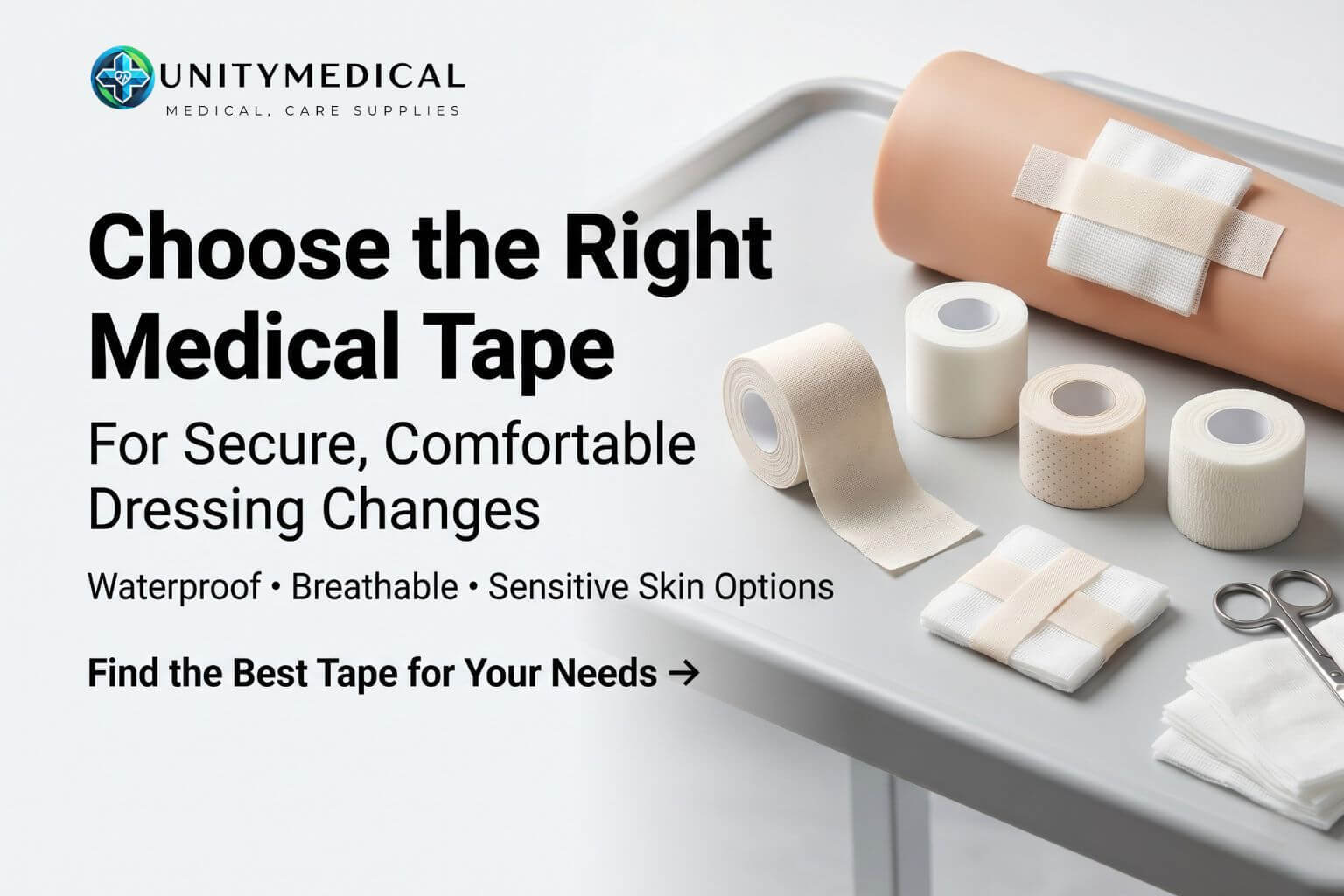
Medical tape works alongside gauze pads and wound dressings to keep wounds protected between changes.
Types of Medical Tape and When to Use Each
Waterproof Medical Tape
Waterproof tape is designed for situations where moisture may be a concern, such as bathing, sweating, or everyday movement. It can help keep dressings secure when standard tape may loosen too quickly.

CURAD Waterproof Adhesive Tape
Reliable moisture-resistant protection for wound dressings in wet or active environments.
- Strong waterproof seal
- Ideal for showering or sweating
- Available in 5 & 10 yard rolls
Heavy-Duty Cloth Tape
Cloth tape is often a good choice when you need a stronger hold. It is useful for securing thicker dressings, supporting bandages in high-movement areas, or keeping supplies in place during extended wear.

CURAD Heavy-Duty Cloth Tape
Extra-strong adhesion for securing dressings in high-movement or demanding environments.
- High tensile strength
- Durable for extended wear
- Ideal for clinical, workplace, and home care use
Porous Sports Adhesive Tape
Porous tape allows more airflow than many standard adhesive tapes. It is often useful around joints, elbows, knees, wrists, or other areas where flexibility and breathability matter.

CURAD Ortho-Porous Sports Adhesive Tape
Breathable, flexible support designed for joints and active movement areas.
- Allows airflow to reduce moisture buildup
- Flexible for joints and mobility
- Available in multiple widths
Self-Adherent Tape
Self-adherent tape is especially useful when you want to avoid adhesive contact with the skin. Instead of sticking directly to the skin, it sticks to itself, making it a strong option for sensitive skin, fragile skin, and frequent dressing changes.

CURAD Self-Adherent Ouchless Tape
Gentle, non-adhesive contact makes this ideal for sensitive or fragile skin.
- Sticks to itself, not skin
- No adhesive residue
- Perfect for frequent dressing changes
Silicone Medical Tape
Silicone tape uses a soft silicone adhesive that holds firmly but lifts off cleanly. It can usually be lifted and repositioned without losing its hold. That makes it a common choice for fragile or elderly skin and for dressings changed often. Unity carries Medline Gentac Silicone Medical Tape and Gentac EZ Silicone Medical Tape, which tears by hand.
Paper, Transparent and Silk-Like Tape
Paper tape is light, breathable and gentle, a good everyday choice for securing gauze on intact skin (CURAD Gentle Adhesive Paper Tape for Sensitive Skin; CURAD Paper Adhesive Tape). Transparent tape lets you see the skin underneath and holds well on tubing (CURAD Transparent Adhesive Tape; Medline Transparent Adhesive Medical Tape). Silk-like cloth tape is stronger than paper and tears easily by hand (CURAD Silk-Like Cloth Medical Tape; Medline Silk-Like Cloth Adhesive Tape).
Dressing Retention Tape
Wide, stretchy retention tape covers a whole dressing instead of taping its edges, which helps on joints and curved areas (Medline MedFix Dressing Retention Tape; Dynarex Dressing Retention Sheet, 2” to 6” widths).
How to Choose Medical Tape by Use Case
Best Medical Tape for Sensitive Skin
For sensitive or fragile skin, avoid overly aggressive adhesives when possible. A self-adherent option is often preferred because it secures the dressing without sticking directly to the skin.
Best Medical Tape for Dressing Changes
For repeat dressing changes, look for tape that balances secure hold with gentle removal. This is especially important for caregivers, elderly patients, and anyone managing long-term wound care.
Best Medical Tape for Active Patients
For areas that bend or move frequently, such as knees, elbows, hands, or wrists, consider flexible cloth or porous sports tape. These options help keep the dressing secure during movement.
Best Medical Tape for Wet Conditions
If the dressing may be exposed to water, sweat, or moisture, waterproof medical tape is usually the better choice. It helps prevent loosening and can reduce the need for unnecessary reapplication.
Best Medical Tape for Elderly or Sensitive Skin
For elderly patients or fragile skin, self-adherent tape is typically the safest option. It avoids adhesive contact while still securing dressings effectively.
Medical Tape Comparison Guide
| Tape Type | Best For | Recommended Product |
|---|---|---|
| Waterproof Tape | Moisture, bathing, sweating | CURAD Waterproof Adhesive Tape |
| Cloth Tape | Strong hold, bulky dressings | CURAD Heavy-Duty Cloth Tape |
| Porous Sports Tape | Joints, movement, breathability | CURAD Ortho-Porous Sports Tape |
| Self-Adherent Tape | Sensitive skin, frequent dressing changes | CURAD Self-Adherent Ouchless Tape |
| Silicone Tape | Fragile or elderly skin, frequent changes | Medline Gentac EZ Silicone Medical Tape |
| Paper Tape | Light dressings on intact skin | CURAD Gentle Adhesive Paper Tape |
| Transparent Tape | Seeing the skin underneath, tubing | CURAD Transparent Adhesive Tape |
| Retention Tape | Covering whole dressings on joints and curves | Medline MedFix Dressing Retention Tape |
What Else Should You Keep With Medical Tape?
Medical tape works best as part of a complete dressing-change setup. For routine wound care, consider keeping the following supplies available:
- Gauze pads or non-stick dressings
- Medical tape suited to the patient’s skin and dressing type
- Antiseptic wipes or cleansing supplies
- Disposable gloves
- Bandages in assorted sizes
- Ointment packets, when appropriate

Build a Complete Dressing Kit
Pair your medical tape with essential wound care supplies for faster, safer dressing changes.
- Includes bandages, wipes, and ointments
- Great for home, clinic, or workplace use
- Ideal companion to any medical tape
Build out your kit: Gauze Pads · Wound Dressings · Prep Pads · Bandages
Removing Tape Gently
Much of the skin damage from tape happens during removal. An adhesive remover loosens the adhesive so the tape lifts without pulling skin: Medline Adhesive Remover Pads (acetone-free) or Medline SurePrep No-Sting Adhesive Remover Spray. On fragile skin, a no-sting barrier film such as Medline SurePrep, applied before the tape, leaves a protective layer between the adhesive and the skin.
Common Mistakes to Avoid When Using Medical Tape
- Using tape that is too aggressive: Strong adhesive may not be ideal for fragile or sensitive skin.
- Applying tape to damp skin: Moisture can reduce adhesion and increase irritation.
- Wrapping too tightly: Tape should secure the dressing without restricting circulation.
- Leaving tape on too long: Replace tape during scheduled dressing changes or when it becomes loose or soiled.
- Using the wrong tape for the location: A joint or high-movement area may need a more flexible option.
Tips for Applying and Removing Medical Tape Safely
- Clean and dry the surrounding skin before applying tape.
- Apply the tape smoothly without pulling or stretching the skin.
- Use enough tape to secure the dressing, but avoid over-taping.
- Remove tape slowly and close to the skin surface.
- For fragile skin, support the skin with one hand while removing the tape with the other.
Shop Medical Tape for Every Application
Explore a full range of medical tapes designed for wound care, sensitive skin, and secure dressing changes.
Shop All Medical Tape →Frequently Asked Questions About Medical Tape
What is the best medical tape for sensitive skin?
Self-adherent tape is often a good choice for sensitive skin because it sticks to itself rather than directly to the skin. This can help reduce discomfort during removal.
What tape is best for wound dressing changes?
The best tape depends on the dressing type, skin condition, and wound location. For frequent dressing changes, choose a tape that provides enough hold while still being gentle during removal.
Is waterproof medical tape better?
Waterproof tape is better when moisture exposure is a concern. It can help keep dressings secure during bathing, sweating, or humid conditions.
Can medical tape damage skin?
Yes, medical tape can irritate or damage skin if the adhesive is too strong, if it is removed too quickly, or if it is used repeatedly on fragile skin. Choosing the right tape and removing it carefully can help reduce this risk.
Can I use sports tape for wound dressings?
Sports adhesive tape may be useful for flexible support and high-movement areas, but it should be selected carefully based on the dressing, wound location, and skin sensitivity.
How often should medical tape be changed?
Medical tape should generally be changed when the dressing is changed, or sooner if it becomes wet, loose, dirty, or uncomfortable.
What is the gentlest medical tape?
Self-adherent tape, which sticks only to itself, and silicone tape are the gentlest options. Paper tape is gentle for light dressings on intact skin.
Is silicone tape good for sensitive skin?
Silicone tape is designed to remove cleanly with less pull on the skin, so it’s often used on sensitive or fragile skin. If redness or irritation continues, stop using it and ask a nurse or doctor.
Final Thoughts
Learning how to choose medical tape comes down to matching the tape to the skin, wound location, dressing type, and daily activity level. Waterproof tape helps with moisture protection, cloth tape provides stronger hold, porous sports tape adds flexibility, and self-adherent tape is often best for sensitive skin or frequent dressing changes.
For home care, clinics, and workplace first aid stations, keeping multiple tape types on hand can make dressing changes easier, safer, and more comfortable.