
What to Keep in a Workplace First Aid Kit
Published by UnityMedicalSupplies on Apr 23rd 2026
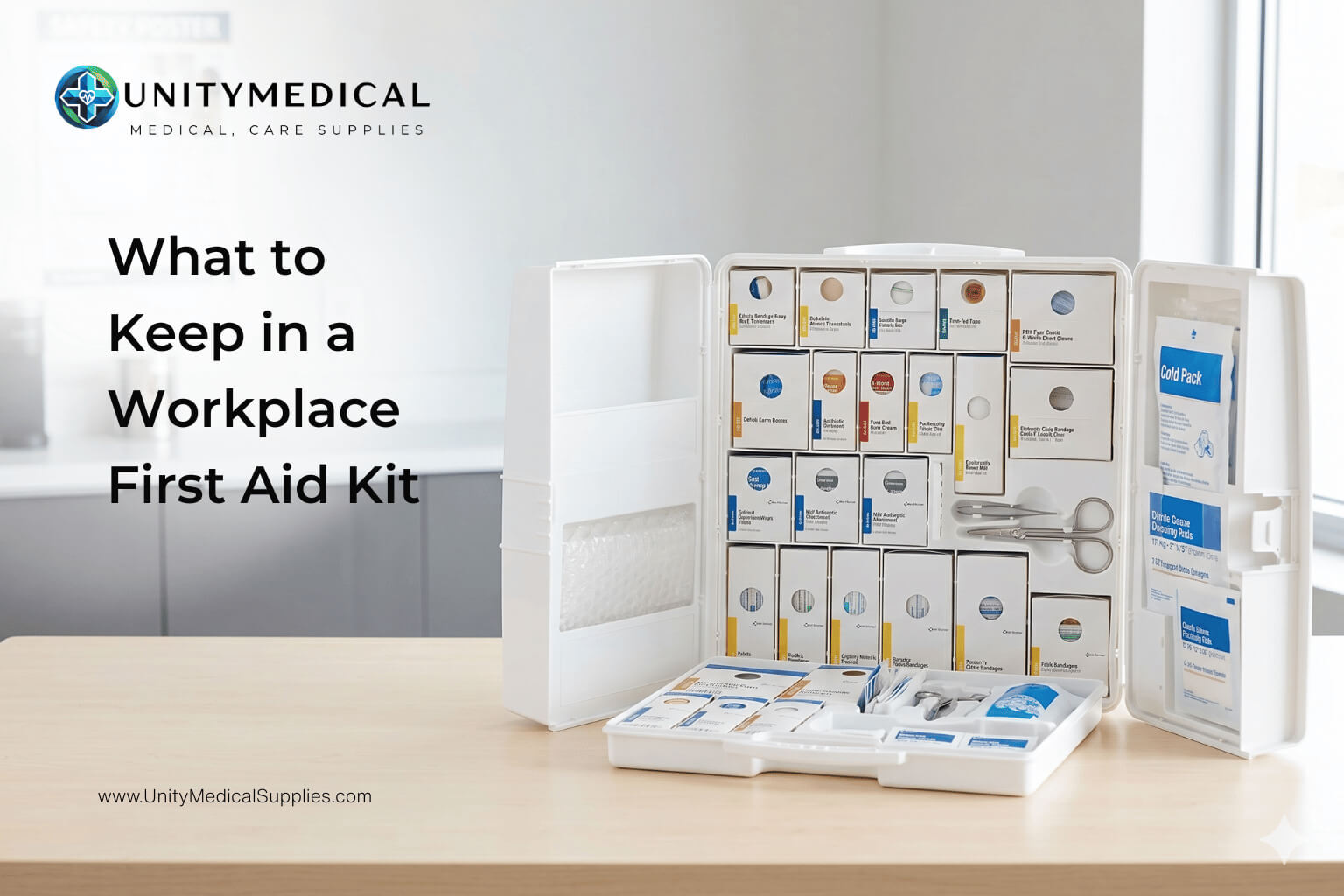
What to Keep in a Workplace First Aid Kit
A workplace first aid kit is only useful when it is complete, easy to find, and stocked with supplies that match the needs of the people using it. Whether you manage an office, school, warehouse, clinic, retail space, or shared facility, the right kit helps your team respond more quickly to everyday cuts, scrapes, minor burns, and other common incidents.
Many workplace kits are either too small, outdated, missing key items, or not restocked often enough. This guide explains the core workplace first aid kit essentials, how to choose the right kit size, and when to refill supplies so your team is better prepared.
For a broader preparedness guide, see our related article: First Aid Kit Essentials for Home, Work, and On-the-Go Use.
Why Every Workplace Needs a Proper First Aid Kit
Workplace injuries are often minor, but they still require fast, organized access to the right supplies. A well-stocked first aid kit can help employees or designated responders handle everyday incidents more confidently while reducing the stress of searching for missing items.
Workplace first aid kits are useful in many environments, including:
- offices and administrative buildings
- schools and daycare facilities
- warehouses and distribution centers
- retail stores and restaurants
- clinics, care facilities, and shared workspaces
- field teams, vehicles, and mobile work crews
For a full selection of related supplies, browse Wound Care & First Aid Supplies.
Workplace First Aid Kit Essentials: Core Supplies Checklist
The right kit should include more than a few adhesive bandages. A reliable workplace setup should cover minor cuts, larger scrapes, basic wound cleaning, dressing securement, minor burns, and cleaner response.
Adhesive Bandages
Adhesive bandages are the most frequently used item in many first aid kits. Keep multiple sizes and shapes available, including standard strips, fingertip bandages, and knuckle bandages where hand injuries are common.
Gauze Pads and Non-Stick Dressings
Gauze pads and non-stick dressings provide more coverage than a small adhesive strip. They are useful for larger scrapes, minor wounds, or areas where a standard bandage does not provide enough coverage.
Medical Tape
Medical tape helps secure gauze, dressings, and wraps. It is one of the easiest items to overlook, but it becomes essential when a wound needs more than a simple bandage.
Antiseptic Wipes and Wound Cleansers
Antiseptic wipes and cleansers help prepare the area before applying a dressing. These items are especially important because they are used up quickly and may expire over time.
Antibiotic Ointment
Many workplace kits include antibiotic ointment packets or similar wound care ointments for basic first aid use where appropriate.
Disposable Gloves
Gloves help support a cleaner first aid response and are especially important in shared workplace settings where multiple people may use the same kit.
Elastic Wraps and Compression Bandages
Elastic wraps can help with light support, wrapping, or securing certain dressings. They add flexibility to a first aid kit beyond simple wound coverage.
Burn Care Supplies
Burn gel, burn dressings, or other burn care basics may be useful in kitchens, labs, maintenance areas, warehouses, and other environments where minor burns are more likely.
Cold Packs
Instant cold packs are useful for bumps, swelling, and minor impact-related injuries. They are especially helpful in schools, warehouses, and active work environments.
Tools
Scissors and tweezers are small but important additions. Scissors help cut tape, gauze, or wraps, while tweezers may be useful for carefully handling splinters or debris.
Choosing the Right Workplace First Aid Kit Size
The best first aid kit depends on your employee count, facility layout, and work environment. A small office may only need a compact kit, while a school, warehouse, or larger facility may need multiple high-capacity kits placed in accessible areas.
Small Offices and Shared Workspaces
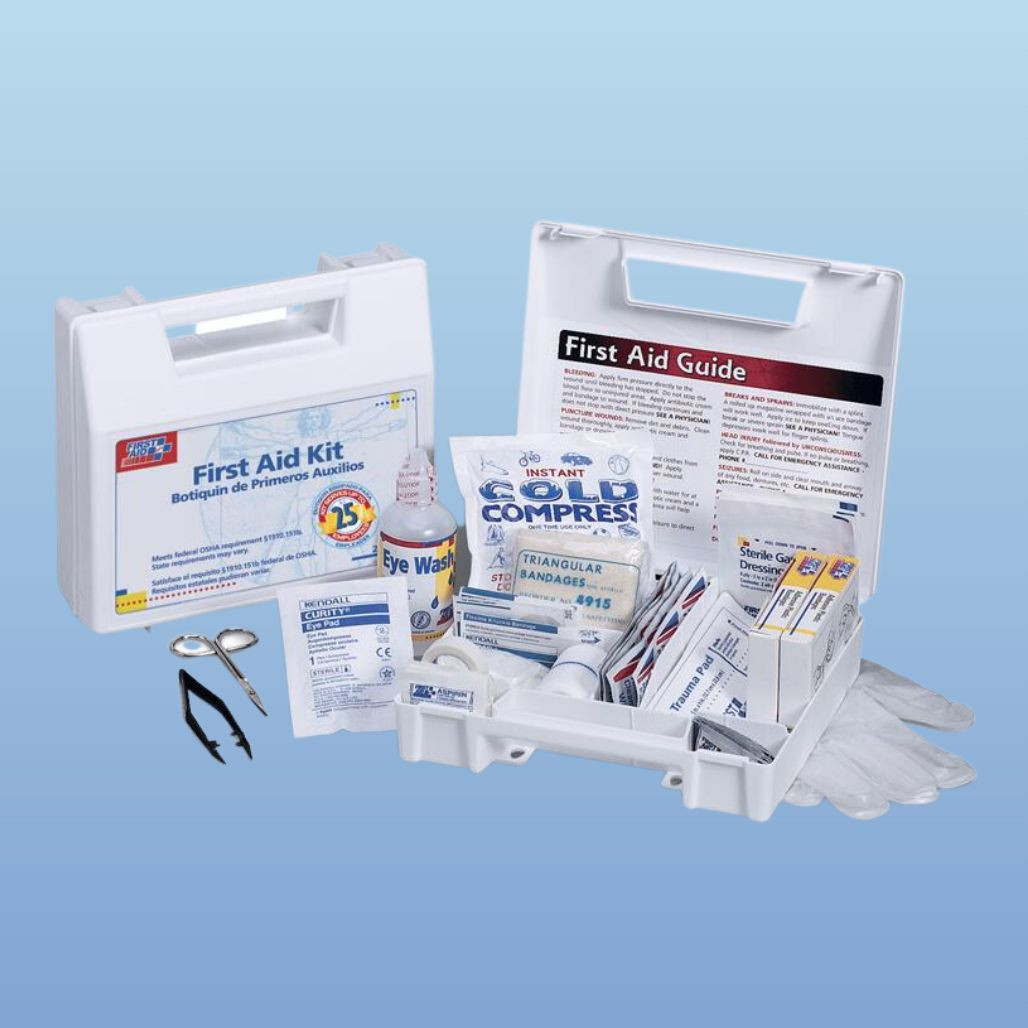
Medline Small Business First Aid Kit, 106 Pieces
This compact kit is a practical choice for smaller offices, reception areas, break rooms, and shared workspaces. It provides a solid foundation for everyday first aid needs without taking up much space.
Best for: small offices, administrative teams, front desks, and light-use workplace areas.
Mid-Size Workplaces

Medline Large General First Aid Kit, 203 Pieces, for 50 People
This larger general-purpose kit is designed for workplaces with more employees or higher day-to-day usage. It is a good fit for shared facilities that need a broader supply range in one accessible location.
Best for: offices, clinics, classrooms, small warehouses, and workplaces serving up to 50 people.
Large Facilities and High-Traffic Areas

First Aid Only 100 Person, 683 Piece First Aid Kit
For larger teams, schools, warehouses, or high-traffic facilities, a higher-capacity first aid kit can reduce the risk of running out of frequently used supplies too quickly.
Best for: larger offices, schools, warehouses, distribution centers, and facilities with up to 100 people.
Compliance-Focused Workplaces

Certified Safety First Aid Kit, ANSI Class A
An ANSI Class A kit is a practical option for many general workplace settings where safety teams want a kit designed around recognized workplace first aid supply categories.
Best for: offices, schools, facility teams, and workplaces looking for an ANSI Class A first aid kit option.
Portable and On-the-Go First Aid

CURAD 75 Piece Compact Portable First Aid Kit
A compact portable kit is useful for vehicles, field teams, school trips, mobile staff, or smaller spaces where quick access matters but storage is limited.
Best for: cars, travel bags, mobile workers, field teams, and backup first aid stations.
Workplace First Aid Kit Size Guide
| Workplace Type | Suggested Kit Type | Key Consideration |
|---|---|---|
| Small office | Compact business kit | Easy storage and basic everyday coverage |
| Mid-size workplace | 50-person general kit | More supplies for shared use |
| Large facility | 100-person high-capacity kit | Higher volume and fewer stockouts |
| Compliance-focused workplace | ANSI Class A kit | Useful for general workplace readiness |
| Vehicle or mobile team | Portable compact kit | Quick access away from the main facility |
Common Workplace First Aid Kit Mistakes
Choosing a Kit That Is Too Small
A kit that works for a small office may not be enough for a school, warehouse, or large facility. Employee count, visitor traffic, and work environment should all influence kit size.
Missing Core Supplies
Bandages are important, but they are not enough by themselves. Gauze, tape, gloves, antiseptic wipes, and basic tools are often the missing items that make a kit feel incomplete during real use.
Letting Supplies Expire
Ointments, wipes, and certain sterile supplies may expire. A kit can look full while still containing items that need to be replaced.
Not Assigning Restocking Responsibility
If no one is responsible for checking the kit, supplies may disappear without being replaced. Assigning one person or department to review the kit can prevent this common issue.
Relying on One Kit for a Large Facility
Large buildings, multiple floors, warehouses, and school campuses may need more than one first aid station. Accessibility matters just as much as supply count.
Workplace First Aid Kit Refill Checklist
Use this checklist when reviewing your office, school, or facility first aid kit.
| Supply | Check For | Restock When |
|---|---|---|
| Adhesive bandages | Multiple sizes and shapes | Low quantity or missing common sizes |
| Gauze pads and dressings | Sterile packaging and enough supply | Used, damaged, or expired |
| Medical tape | Usable roll and clean storage | Roll is missing, low, or no longer adheres well |
| Antiseptic wipes | Packet condition and expiration dates | Expired, dry, or frequently used up |
| Disposable gloves | Quantity and size availability | Low supply or packaging is damaged |
| Burn care supplies | Quantity and expiration dates | Used, expired, or missing |
| Cold packs | Unused packs available | After use or if damaged |
| Scissors and tweezers | Clean, present, and usable | Missing, damaged, or misplaced |
Need to restock or upgrade? Browse First Aid Kits to find workplace-ready options for offices, schools, facilities, and mobile teams.
How Often Should You Check and Restock a Workplace First Aid Kit?
Workplace first aid kits should be checked on a regular schedule. Monthly checks are useful for high-use environments, while quarterly checks may work for lower-traffic offices. Kits should also be reviewed after any incident where supplies were used.
A simple restocking routine should include:
- checking expiration dates
- replacing used or missing items
- confirming the kit is easy to access
- making sure employees know where the kit is located
- reviewing whether the kit still matches the workplace size and risk level
For shared facilities, it can help to keep a printed checklist inside the kit so the person responsible for restocking can review it quickly.
Building a More Reliable Workplace First Aid Setup
A strong workplace first aid setup may include more than one kit. For example, a main office might keep a wall-mounted or cabinet-style first aid kit in a common area, while a vehicle, field team, or remote work area may need a smaller portable kit.
For larger facilities, think about access points. If employees work across multiple floors, buildings, classrooms, warehouses, or departments, one central kit may not be enough. The goal is to make supplies easy to reach when they are needed.
At a minimum, a more reliable setup should include:
- the right kit size for your team
- easy-to-find placement
- basic refill supplies
- a scheduled review process
- clear responsibility for restocking
Final Thoughts
Workplace first aid preparedness starts with having the right supplies in the right place. A good kit should cover everyday injuries, match the size and layout of the workplace, and be checked often enough that missing items are replaced before they are needed.
Whether you are managing an office, school, warehouse, clinic, or facility team, investing in the right first aid kit can make everyday safety planning easier and more dependable.
Explore workplace first aid kits and wound care supplies to build or restock a kit that fits your team’s needs.
Frequently Asked Questions
What should be in a workplace first aid kit?
A workplace first aid kit should usually include adhesive bandages, gauze pads, dressings, medical tape, antiseptic wipes, disposable gloves, cold packs, burn care supplies, scissors, tweezers, and other basic wound care items.
How many first aid kits does a workplace need?
The number of kits depends on workplace size, employee count, building layout, and risk level. Larger facilities, multi-floor buildings, schools, warehouses, and mobile teams may need multiple kits placed in accessible locations.
How often should workplace first aid kits be checked?
Many workplaces check kits monthly or quarterly, depending on usage. Kits should also be reviewed after any incident where supplies were used so missing items can be replaced promptly.
What is an ANSI Class A first aid kit?
An ANSI Class A first aid kit is designed for many common workplace first aid needs. It is generally suited for lower-risk workplace environments that need a standardized set of basic first aid supplies.
Should workplaces have portable first aid kits?
Portable first aid kits are useful for vehicles, field teams, school trips, mobile staff, and larger facilities where employees may not always be near the main first aid station.