
Adult Wipes for Incontinence Care: Wet Wipes, Dry Wipes, No-Rinse Cleansers and Barrier Cloths
Published by UnityMedicalSupplies on Oct 26th 2026
Updated October 2026
The short answer
For incontinence care, the best cleansing product is gentle, pH-balanced and needs no rinsing. That usually means a large pre-moistened adult wipe, or a no-rinse spray or foam cleanser used with a soft dry wipe. Clean promptly after every episode, pat the skin dry rather than rubbing, and finish with a barrier product.
Bar soap and a washcloth are not ideal for frequent cleanups. Research reviews note that soap and water can raise skin pH, dry the skin and add friction. A barrier cream cloth combines cleansing and protection in one step, which saves time at busy changes.
This guide compares the main options, explains what to look for on the label, and walks through a simple routine for each change.
Why gentle cleansing matters
Urine and stool are hard on skin. Repeated contact with moisture, combined with rubbing and frequent washing, can lead to incontinence-associated dermatitis (IAD): red, sore, sometimes broken skin in the groin, buttocks and inner thighs.
A 2021 systematic review of IAD prevention in older adults found broad agreement on a few points, though most of the evidence is expert opinion rather than trials:
- Clean promptly after each episode, rather than waiting for a scheduled change.
- Avoid soap and water for routine cleanups; they can raise skin pH, dry the skin and cause friction damage.
- Use a cleanser close to skin pH, roughly 5.5 in most of the sources reviewed.
- Prefer no-rinse cleansers, such as foams, sprays or pre-moistened wipes.
- Minimize friction. Don't scrub; pat dry instead of rubbing.
- Protect after cleansing with a barrier such as dimethicone, petrolatum or zinc oxide.
Our guide to barrier cream vs zinc oxide vs barrier film covers that last step in detail.
The main types of incontinence cleansing products
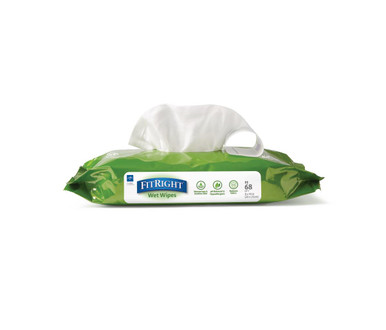
Pre-moistened adult wipes. Larger and sturdier than baby wipes, usually 8 x 10 inches or more, so one wipe covers more skin with less rubbing. Many are pH-balanced and alcohol-free. FitRight Aloe Personal Cleansing Wipes are 8 x 10 inches with aloe, in packs of 48, 68 or 100. For a simpler formula, Medline Simply Water Wet Wipes are 99% water and made for delicate skin.
Dry wipes and disposable washcloths. Soft cloths you use dry to blot, or wet with water or a no-rinse cleanser. They are economical and let you control what touches the skin. FitRight UltraSoft Dry Wipes come 100 to a resealable pack; Medline UltraSoft dry cleansing cloths are a larger 10 x 12 inches.
No-rinse sprays and foams. Liquid or foam cleansers you apply and wipe away, with nothing to rinse. Foam stays where you put it, which helps on a person lying in bed. Unity carries Remedy Essentials No-Rinse Spray Cleanser, which is pH-balanced, and Remedy Essentials No-Rinse Foam Cleanser.
Barrier cream cloths. Pre-moistened cloths that clean, moisturize and leave a protective barrier in one step. Remedy Essentials 3-in-1 Barrier Cream Cloths and Remedy Clinical 3-in-1 cloths with dimethicone need no rinsing, and the Essentials listing says the cloths can be used as is or warmed.
Bathing cloths. Pre-moistened cloths for a full bed bath without soap, water or a basin. A pack of 8 covers the whole body, one cloth per area. Options include ReadyBath SELECT (medium weight), ReadyBath LUXE (heavyweight) and ReadyBath Evolve.
Perineal care cloths for catheter users. ReadyCleanse Meatal & Perineal Care Cloths are made for daily care of someone with an indwelling Foley catheter, in single-patient packs of 5.
Incontinence cleansing products compared
| Pre-moistened adult wipes | Dry wipes + no-rinse cleanser | Barrier cream cloths | Bathing cloths | Soap, water and a washcloth | |
|---|---|---|---|---|---|
| Best for | Quick cleanups at every change | Heavy soiling; control over what touches the skin | Busy changes where skin needs protection too | Full bed baths | Occasional washing, not frequent cleanups |
| Rinse needed | No | No | No | No | Yes |
| Protects skin afterward | No; add a barrier | No; add a barrier | Yes, in the same step | No; add a barrier where needed | No |
| Friction | Low with large, soft wipes | Low; foam reduces rubbing | Low | Low | Higher: towels and rubbing |
| Approx. cost on Unity case pricing (Oct 2026) | About 7¢ per wipe (FitRight Aloe) | About 5¢ per dry wipe, plus cleanser | About $1 per cloth (Remedy Essentials) | About $2.20 per 8-cloth bath (ReadyBath SELECT) | Lowest, but takes more time |
| Unity examples | FitRight Aloe, ReadyFlush SELECT | FitRight UltraSoft Dry + Remedy no-rinse foam | Remedy Essentials 3-in-1, Remedy Clinical 3-in-1 | ReadyBath SELECT, ReadyBath LUXE | — |
Cost figures are rough estimates based on Unity case prices in October 2026. Prices change, so check the current price on each product page before you order.
Many caregivers keep two products on hand: adult wipes for routine changes, and a no-rinse foam with dry wipes, or barrier cream cloths, for heavier cleanups and skin that is already irritated.
What to look for on the label
- pH-balanced. Healthy skin is slightly acidic, and the IAD review favors cleansers close to skin pH. Look for "pH balanced" on the pack. ReadyFlush wipes, ReadyBath LUXE cloths and Remedy Essentials spray all say so on their Unity listings.
- No rinse. Rinsing adds water, time and more wiping. A no-rinse formula lets you clean and move straight on to drying and protection.
- Alcohol-free. Skin cleaned many times a day needs the mildest formula you can find. ReadyFlush wipes and ReadyBath Evolve cloths are listed as alcohol-free.
- Size and thickness. Adult wipes of 8 x 10 inches or more, like FitRight and ReadyFlush, cover more skin per pass and tear less. Thicker cloths such as ReadyBath LUXE suit full baths.
- Scented or fragrance-free. Scent can help in a shared room, but fragrance-free is the safer choice for sensitive or broken skin. ReadyFlush and ReadyBath SELECT come either way.
- "Flushable" claims. Some wipes, including ReadyFlush, NatureSoft and ReadyBath Evolve, are sold as flushable. The EPA advises flushing only toilet paper and putting all wipes, including those labeled flushable, in the trash, because they clog sewer and septic systems. We recommend the trash for every wipe, especially on a septic system.
A cleanse-and-protect routine for each change
This routine follows the points the IAD review agrees on. If a nurse or wound care team has given you a plan, follow theirs.
- Gather supplies first. You need gloves, wipes or a no-rinse cleanser with dry wipes, a barrier product, a clean brief or pad, and an underpad to protect the bed.
- Wash your hands and put on gloves.
- Remove the soiled product and clear away most of the stool with the inside of the brief or a dry wipe.
- Clean front to back. Use a fresh area of the wipe, or a fresh wipe, for each pass, so stool isn't wiped toward the urinary opening. For heavy soiling, apply no-rinse foam, let it sit briefly, then lift it away.
- Don't scrub. Use light pressure and let the cleanser do the work.
- Pat dry. Blot with a soft dry wipe, and check skin folds.
- Check the skin. Look for redness, rash or broken areas, especially on the buttocks, groin and inner thighs.
- Protect. Apply a thin layer of barrier cream, zinc oxide paste or barrier film. If you used a 3-in-1 barrier cream cloth, this step is already done.
- Put on a clean product and dispose of waste. Bag the used brief and wipes for the trash, remove your gloves and wash your hands.
When to call a nurse or doctor: skin that stays red after protection, open or weeping areas, a rash that spreads, or pain. Those need assessment, not just more cleansing.
If the person uses a urinal in bed, our guide to male vs female urinals covers positioning, emptying and cleaning.
How to choose
- Home care for one person, light to moderate incontinence: large adult wipes such as FitRight Aloe plus a barrier cream. Buy a single pack to try, then a case once you know what works.
- Bedbound care or heavy soiling: a no-rinse foam or spray with soft dry wipes, so you can lift soil away with less rubbing.
- Skin that is already red or fragile: fragrance-free products, and consider barrier cream cloths so cleaning and protection happen in one gentle step.
- Full bed baths: a pack of ReadyBath cloths replaces the basin, soap and towels.
- Indwelling catheter care: ReadyCleanse perineal care cloths, as the care team directs.
- Care facilities and home-health agencies: most of these products sell by the case (for example, 576 ReadyFlush SELECT wipes or 30 packs of ReadyBath cloths), which keeps per-change cost down and rooms stocked. Orders over $50 ship free, and our help page lists how to reach us about larger volumes.
Browse the full range in personal wipes.
Frequently asked questions
What is the difference between adult wipes and baby wipes?
Adult wipes are larger, usually 8 x 10 inches or more, and thicker, so one wipe covers more skin and is less likely to tear. Baby wipes work in a pinch, but you will use more of them and rub more. Some products, such as Medline Simply Water wipes, are sold for both babies and adults.
Are flushable wipes safe to flush?
The EPA advises against it. Its guidance is to flush only toilet paper and put all wipes, including those labeled flushable, in the trash, because they clog sewer and septic systems.
Can I use soap and water instead?
For an occasional wash, yes. For cleanups several times a day, reviews of incontinence skin care favor pH-balanced, no-rinse cleansers. Frequent soap and water can raise skin pH and dry the skin, and towel drying adds friction.
What is a perineal cleanser?
A perineal cleanser is a no-rinse spray, foam or pre-moistened cloth for the genital and anal area. It is made to break down urine and stool residue gently. Remedy Essentials no-rinse spray and foam, and ReadyCleanse cloths for catheter care, are examples Unity carries.
Do I still need a barrier cream if I use cleansing wipes?
Yes, unless you use a 3-in-1 barrier cream cloth. Regular wipes clean but don't leave a protective layer. Apply a thin barrier after each cleanup; see our barrier cream guide for which to use.
Shop personal wipes and no-rinse cleansers, from single packs to case quantities. Orders over $50 ship free.