
Compression Bandages Explained: Short-Stretch, Long-Stretch and Multi-Layer Systems
Published by UnityMedicalSupplies on Oct 26th 2026
Updated October 2026
The short answer
"Compression bandage" covers two very different things:
- Everyday elastic wraps for sprains, strains and holding a cold pack or splint. You can put these on yourself.
- Therapeutic compression systems for venous leg ulcers, chronic venous insufficiency and lymphedema. These include short-stretch bandages, Unna boots and 2-, 3- and 4-layer kits. A clinician should assess the leg, choose the system and show you or the patient's nurse how to apply it.
The biggest difference between bandages is how far they stretch. Short-stretch bandages stay firm and push back when muscles move. Long-stretch bandages stretch further and keep squeezing even at rest.
This guide explains each type and compares the systems Unity carries. It also covers how to tell when a wrap is too tight.
Short-stretch vs long-stretch compression bandages
Compression bandages are grouped by how far they stretch. According to Physiopedia, short-stretch bandages extend by 10% to 100% of their length. Long-stretch bandages extend by more than 100%.
That difference changes how the bandage presses on the leg:
- Resting pressure is the squeeze when the leg is still. Short-stretch bandages have low resting pressure. Long-stretch bandages have higher resting pressure, which some people find harder to tolerate.
- Working pressure is the push-back when calf muscles tighten as you walk. Short-stretch bandages give high working pressure: the firm fabric acts like a wall the muscle pumps against, which supports blood and lymph flow. Long-stretch bandages give way as the muscle moves, so they keep a steadier squeeze during activity.
| Short-stretch | Long-stretch | |
|---|---|---|
| How far it stretches | 10% to 100% | More than 100% |
| Pressure at rest | Low | Higher |
| Pressure while walking | High | Steadier |
| Typical use | Venous and lymphatic swelling | Active patients; layers within some multi-layer kits |
| Unity examples | Medline Firm-Wrap; the compression layers of AccuWrap Lite and TwoFlex | The compression layers in FourFlex |
Medline Firm-Wrap is a 100% cotton short-stretch bandage with an interlocking weave that resists stretching. Its listing says one layer gives therapeutic compression and support for localized swelling. It comes in four widths from 2.36 to 4.72 inches, 20 per case.
Multi-layer compression systems and Unna boots
For venous leg ulcers and long-term swelling, clinicians usually build compression in layers. Each layer has a job: padding protects the skin and absorbs drainage, and the outer layers apply compression and hold everything in place. Always follow the kit's instructions for the order and stretch of each layer. Most of the systems below can stay on for up to 7 days, depending on drainage and how much the swelling goes down.
2-layer systems
Two-layer kits are thin and breathable, and their listings say they fit under regular clothes and shoes.
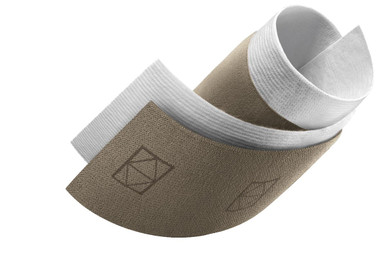
- Medline AccuWrap delivers 30-40 mmHg. A padding layer with a slightly cohesive feel stays in place, and the woven compression layer is printed with an indicator that shows when the right tension is reached. A stocking is included in each kit.
- Medline AccuWrap Lite is the gentler version at 20-30 mmHg, with the same printed indicator.
- Medline TwoFlex delivers 30-40 mmHg. A soft foam layer pads the leg, then a short-stretch cohesive layer goes on at full stretch. Both layers tear by hand, and a nylon stocking goes over the top so clothes and sheets slide over it.
3-layer systems
Medline ThreeFlex gives lighter therapeutic compression. Its listing describes it as designed for patients with mixed disease, meaning venous problems together with some reduced arterial blood flow. The layers cushion and absorb, create a smooth surface, then apply compression. It comes in 4-inch width, 8 per case.
4-layer systems
Medline FourFlex applies sustained high compression with long-stretch layers for chronic venous insufficiency. The first layer cushions and absorbs, the second smooths the shape of the leg, and the last two compress and hold. An extra-large kit is 30% longer for bigger limbs. Picture-based instructions guide each step.
Unna boots
An Unna boot is a gauze bandage soaked in zinc oxide paste, wrapped around the lower leg. It gives mild compression with semi-rigid support, and the paste helps soothe irritated skin. Unity carries the Medline Unna-Z and Dynarex Durma+, both in 3- and 4-inch widths, 10 yards long. Unna-Z can stay on for up to 7 days, depending on drainage. Both come in plain zinc oxide or with calamine. The Durma+ listing also names sprains, strains and dislocations among its uses.
Zinc oxide also appears in skin protectants; see our guide to barrier cream vs zinc oxide vs barrier film.
Compression systems compared
All figures come from the product listings. Compression levels are given only where the manufacturer states them.
| System | Layers | Compression | Wear time | Pack |
|---|---|---|---|---|
| Medline AccuWrap Lite | 2 | 20-30 mmHg | Up to 7 days | Kit or case of 8 |
| Medline AccuWrap | 2 | 30-40 mmHg | Up to 7 days | Single kit or case of 8; XL by the case |
| Medline TwoFlex | 2 (foam + short-stretch cohesive) | 30-40 mmHg | Up to 7 days | Kit or case of 8; standard or XL |
| Medline ThreeFlex | 3 | Light (for mixed disease) | Up to 7 days | Case of 8 |
| Medline FourFlex | 4 | High, long-stretch | Up to 7 days | Case of 8 kits; standard or XL |
| Medline Unna-Z | 1 (zinc paste gauze) | Mild | Up to 7 days | Box of 1 or case of 12 |
| Dynarex Durma+ | 1 (zinc paste gauze) | Mild | Not stated | 12 per case |
| Medline Firm-Wrap | 1 (short-stretch cotton) | Therapeutic, single layer | Not stated | Case of 20 |
Which system and pressure is right depends on the person's circulation, so a clinician makes that call. Clinics and home-health agencies can buy by the case; see the full compression bandages range.
Everyday wraps: elastic, cohesive and tubular
For a sprain or strain, a simple wrap gives gentle compression that helps reduce swelling in the first few days after an injury, according to MyHealth Alberta. Compression alone doesn't protect the joint, so it doesn't replace a brace when you put weight on it.
- Elastic bandages with self-closure. Medline Matrix has hook-and-loop ends, so there are no metal clips to lose. Use it for moderate compression or to hold a splint or cold pack. Medline Swift-Wrap and the CURAD hook-and-loop elastic bandage work the same way. Sterile versions such as Sterile Matrix Wrap are also available.
- Cohesive bandages. A cohesive wrap sticks to itself but not to skin or hair, so it holds gauze or a splint without tape or clips. Medline Cohesive Bandage is latex-free, comes in widths from 1 to 6 inches, and adds light compression. Kids' designs are available in the Medline Kids Pack.
- Tubular bandages. Medigrip latex-free tubular bandage slides on like a sleeve to support a joint or hold a dressing. Doubled over, it gives mild compression, and it is reusable.
These wraps are not substitutes for a prescribed multi-layer system on a leg ulcer.
For more on self-adherent wraps, including how to apply one and how they compare with ACE-type bandages, see our cohesive bandage guide.
Wrist pain from carpal tunnel is different: a wrap compresses but doesn’t keep the wrist straight. See our guide to wrist braces for carpal tunnel.
How to choose a compression bandage
- Sprain, strain or holding a cold pack: an elastic wrap with self-closure, or a cohesive wrap.
- Holding a dressing or splint with light support: a cohesive bandage or a tubular bandage.
- Venous leg ulcer, chronic venous insufficiency or lymphedema: the multi-layer system, short-stretch bandage or Unna boot your clinician prescribes. Therapeutic compression isn't safe for everyone. Physiopedia lists advanced arterial disease, acute deep vein thrombosis, complicated wound infection and uncontrolled heart failure among the reasons not to use it. That's why clinicians check circulation, often with an ankle-brachial index test, before they start.
- Stocking a clinic or home-health bag: keep a few widths of elastic and cohesive wrap on hand, plus the systems your clinicians use most, by the case.
Safety: how to tell a wrap is too tight
A compression wrap should be snug without cutting off circulation. Check the toes or fingers beyond the wrap. MyHealth Alberta says the wrap is too tight if they turn purplish or blue, feel cool, or go numb or tingly. Loosen it right away.
For an everyday elastic wrap, the same guidance says to loosen it at night and stop if it makes pain worse. For a multi-layer system or Unna boot, don't rewrap it yourself: call the clinician who applied it if you notice more pain, numbness, tingling, or changes in skin color or temperature.
Frequently asked questions
What is a compression bandage used for?
Everyday elastic and cohesive wraps help reduce swelling after sprains and strains, and hold cold packs, splints or dressings in place. Therapeutic systems such as short-stretch bandages, Unna boots and multi-layer kits are used under a clinician's care for venous leg ulcers, chronic venous insufficiency and lymphedema.
How long can a compression bandage stay on?
It depends on the type. Many multi-layer kits and the Unna-Z Unna boot are designed to stay on for up to 7 days, depending on drainage and how quickly swelling goes down; your clinician sets the schedule. An everyday elastic wrap should be loosened at night.
Is it OK to wear a compression bandage overnight?
Loosen an everyday elastic wrap before bed. Multi-layer systems are designed to stay on day and night between changes, as prescribed. If anything feels too tight, numb or tingly at night, follow the safety steps above.
What is the difference between a compression bandage and a cohesive bandage?
Cohesive is a kind of material, not a level of compression. A cohesive bandage sticks to itself, not to skin. Some cohesive wraps give light compression for first aid, and some compression systems, such as TwoFlex, use a cohesive outer layer.
Short-stretch or long-stretch: which is better?
Neither is better for everyone. Short-stretch bandages have low pressure at rest and high pressure when muscles work. Long-stretch bandages keep a steadier squeeze during activity. Your clinician chooses based on the condition, how mobile the person is and their circulation.
Shop compression bandages and wound dressings, from single kits to clinic case packs. Orders over $50 ship free.